
Say It Thrice
I recently watched a TED Talk in which the presenter asked the audience to repeat the word DEMENTIA three times. She went on to say she believed for some of them it might have been the first time they had said that word out loud. For others, the hundredth. Perhaps that is the case here at Carol Woods, too. For some of us, dementia is something we think about everyday; for others, it may never cross our minds . . . or if it does, it is quickly banished.
The word dementia can conjure up thoughts, memories, and fear. Our personal histories may include family members with dementia. We may have memories of the care they received (or didn’t receive) as their conditions progressed.
I volunteered to become a part of a small cohort of residents interested in bringing dementia education to our community because I wanted the stigma, fear, and dread attached to the diagnosis to be replaced with understanding, hope, and the knowledge that one can live a good life after diagnosis. I wanted assumptions and myths to be replaced by facts and knowledge.
Because we are a dementia-inclusive community, EVERYONE at Carol Woods needs to know what dementia is and what cognitive changes look like. Whether or not we will personally experience cognitive changes, or whether a loved one, neighbor, or friend will, the reality is that we are ALL going to encounter residents who are experiencing the world differently as their brains change. Understanding brain changes, and how and why a person with dementia experiences the world differently, enables us to be a more caring, compassionate community.
Over the last decade, the commitment to providing dementiaeducation has remained a priority, and has taken many different forms,including:
• speakers in the Assembly Hall
• small discussion groups
• the Lunch and Learn series
• and, most recently, a staff member (Elizabeth Hart, OTR/L)dedicated to providing ongoing programming
Resident participation has been a key part of this effort since its inception. The response to these programs has shown that different resident groups desire different information, so the Resident Education Subcommittee has been creating a two-year cycle of educational programming meant to offer something for everyone.
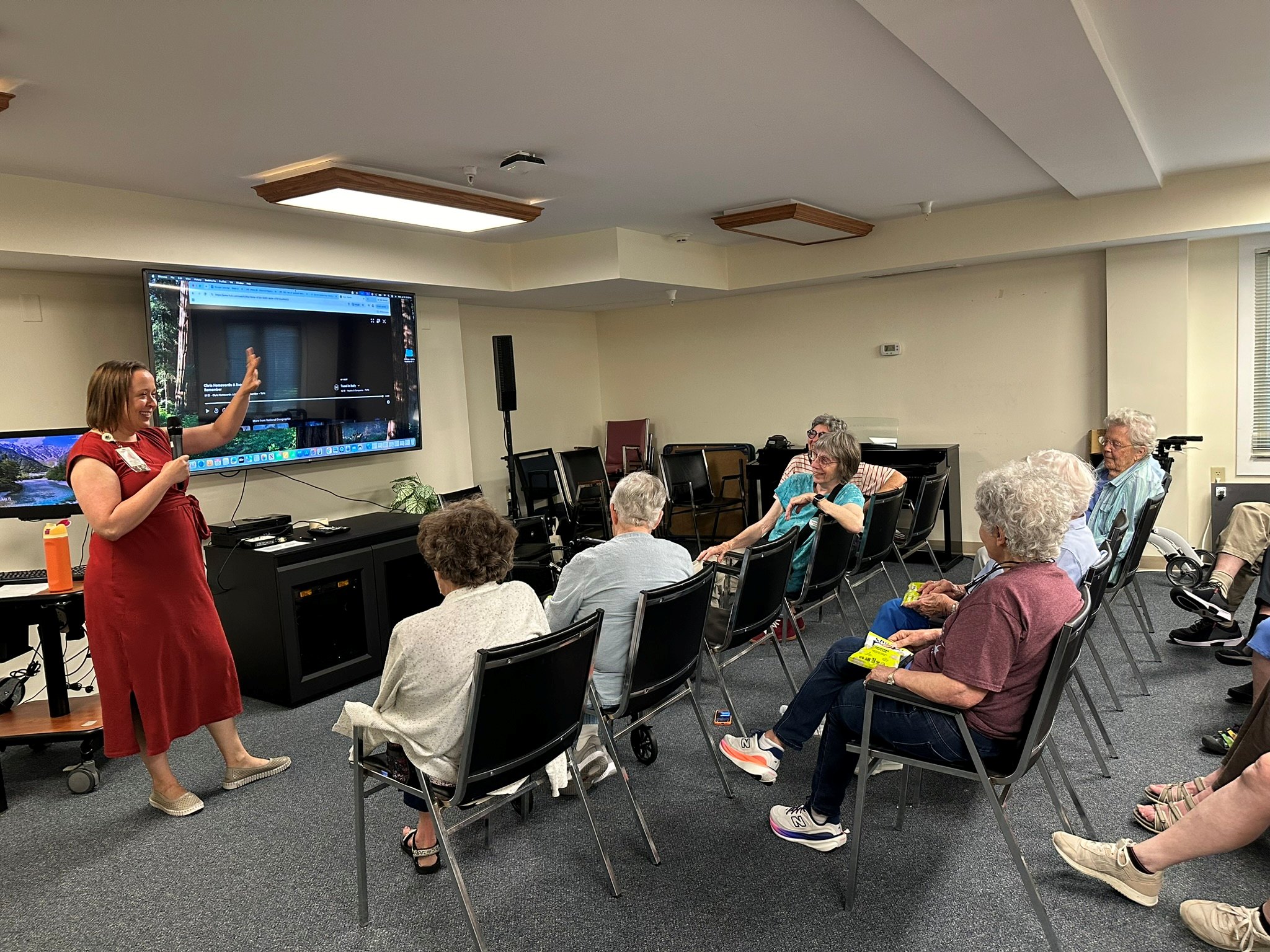
Based upon the most-frequently asked questions staff and members of the committee have received, a cognitive health series was started in the fall of 2025. The series has addressed topics such as expected and unexpected cognitive aging, how to maintain one’s cognitive health, screening and diagnosis, and strategies for managing cognitive changes. In the first half of next year, the committee plans to offer small-group sessions for residents interested in learning more about dementia, individuals interested in learning how to have better interactions with their friends/neighbors living with cognitive change, residents who are experiencing early cognitive changes, and resident care partners looking for strategies to better support their loved ones who are living with dementia. The committee also plans to continue hosting movie screenings and an article discussion group to provide more informal opportunities to learn and talk about cognitive health, and yes, to say DEMENTIA.
Come. Join us. Learn.
“There is wisdom and humor and radiance [in dementia] if only we can see it. We must make the effort to see it because it is what those living with dementia deserve after a long life, well-lived.” Adapted from an essay by Suzanne Finnamore, New York Times.
– Beth Schultz